

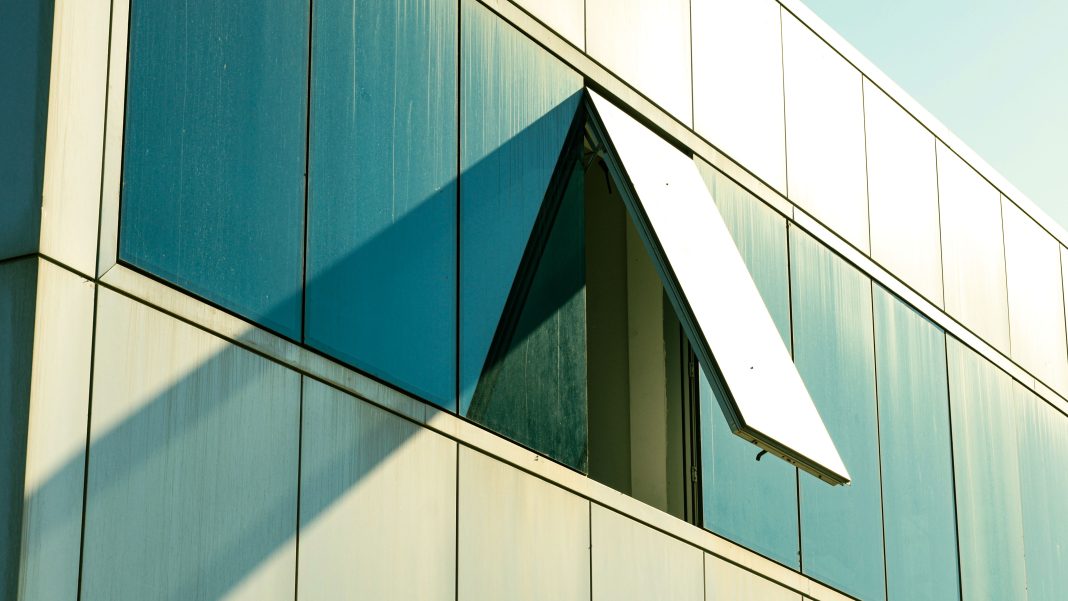

I was not planning to write about sustainable construction on this trip.
Honestly, I came to Copenhagen for the usual reasons: the food, the canals, the bikes everywhere, and that particular kind of calm that Scandinavian cities seem to do better than anywhere else on earth. I had three days, a camera, and a vague plan to wander.
But somewhere between my second pastry and a wrong turn near the waterfront, I ended up reading about a company called a:gain — and two hours later I had booked an impromptu visit to their office on Langebrogade. Sometimes travel does that. You show up expecting one thing and leave thinking about something completely different.
How a:gain Ended Up on My Radar
It started with a conversation. I was sitting at a small café near the harbor, chatting with a local architect named Mads, who had just wrapped up a renovation project. He mentioned offhandedly that the flooring in the building came from “a company that makes new products out of stuff that would have been thrown away.” He pulled up a:gain on his phone, showed me a few photos, and said something that stuck with me: “They make it easy to do the right thing.”
That is a very Danish way of solving a problem, I thought. Not guilt-tripping people into change. Just making the better option the simpler one.
I looked them up that night. a:gain is a Copenhagen-based company that takes discarded materials — things like old timber, glass, and wood that would otherwise go to a landfill or incinerator — and remanufactures them into certified building products. Not experimental, untested stuff. Actual products with the same documentation, performance standards, and certifications you would expect from any conventional building supplier.
What I Saw at the Office
Their office is on the third floor of a building on Langebrogade, in the kind of neighborhood that feels like it’s quietly becoming interesting. I introduced myself as a travel writer (which is stretching it a bit, but it worked), and a member of their team walked me through what they do.
The product lineup surprised me with how… normal it looked. That sounds like a backhanded compliment, but I mean it sincerely. When most people hear “recycled building materials,” they picture something rough, compromise-heavy, or frankly ugly. The a:gain products are none of those things.
There is Bronsø, a thermowood cladding made from secondary timber, with a warm, almost bronze tone to it. There is Funderø, a parquet flooring that looks genuinely beautiful. Tystø is a glass wall partition system made from reclaimed glass. Viddø covers window elements. Dybø is an acoustic batt for sound insulation. And Hjælmø is an end-grain flooring that honestly looks like something you would find in a high-end restaurant.
Every single product comes with full technical documentation, environmental product declarations (EPDs), and CE certifications. They are not asking architects or contractors to take a leap of faith. The paperwork is there. The test results are there. The specifications are the same format as any other supplier.
That is the key thing a:gain figured out. The barrier to using recycled materials in professional construction is not usually values. Most architects and developers already care about sustainability. The barrier is risk: what if the material does not perform? What if the documentation is incomplete? What if something goes wrong on-site?
a:gain removes that friction entirely.
The Numbers That Got My Attention
By the time I visited, a:gain had already delivered to over 100 projects across Denmark. Commercial buildings, public schools, housing developments. Their products have kept more than 2,400 tonnes of materials in circulation rather than letting them go to waste.
I asked whether any of the buildings they had supplied were ones I might have walked past in the city. The answer was yes, probably several. That hit differently. Copenhagen looks beautiful on the surface, and apparently some of that beauty is literally built on things that other people decided were done.
Why This Matters to Someone Who Travels
Here is the thing I keep thinking about.
I have traveled enough to notice that cities are all building at an extraordinary pace right now. Vietnam, China, Thailand, Mexico, every place I have been in the last few years has cranes on the skyline. The global construction industry is one of the heaviest users of raw materials and one of the biggest sources of CO₂ emissions on the planet.
Most of us who travel for a living talk a lot about how we travel, the flights we take, the hotels we choose. We talk less about the buildings those hotels are made of, or the offices we work from, or the apartments we rent for a month in whatever city we have landed in this time.
a:gain is operating in that quieter part of the equation. The part that does not make for obvious travel content, but that matters enormously in the long run.
The construction sector consumes vast amounts of virgin resources every year, while simultaneously discarding valuable materials that still have decades of useful life in them. Companies like a:gain are showing that there is another way to do this, and they are doing it without asking anyone to compromise on quality or performance.
What the Danes Seem to Understand
I have noticed something across every Scandinavian city I have spent time in. There is less of a gap here between caring about something and actually building systems that act on it. It is not that Danish people are more virtuous than anyone else. It is that the infrastructure for doing things better is just more developed.
a:gain fits that pattern. They did not build a company around guilt or greenwashing. They built a product portfolio, got everything certified, made the documentation easy to find, published a price list, and started delivering to real projects. They treated sustainability not as a story to tell but as a supply chain problem to solve.
That is the version of environmentalism that actually changes things.
Should You Visit Copenhagen Specifically for This?
Probably not on its own. But if you are already in the city, and you are curious about how one of the world’s most livable places stays that way, it is worth paying attention to the details around you. The floors, the walls, the windows. Some of them came from a company on Langebrogade that decided the best new building material was one that already existed.
You can find out more about what they do at again.dk. Their download center has all the product documentation if you are in the industry, and their project references page shows real buildings across Denmark where you can actually see the materials in use.
I left Copenhagen thinking differently about cities than when I arrived. That does not happen every trip. When it does, it is usually because of something small, unexpected, and easy to miss if you are not paying attention.
A wrong turn near the waterfront. A conversation about flooring. A company quietly building the future out of things we almost threw away.