

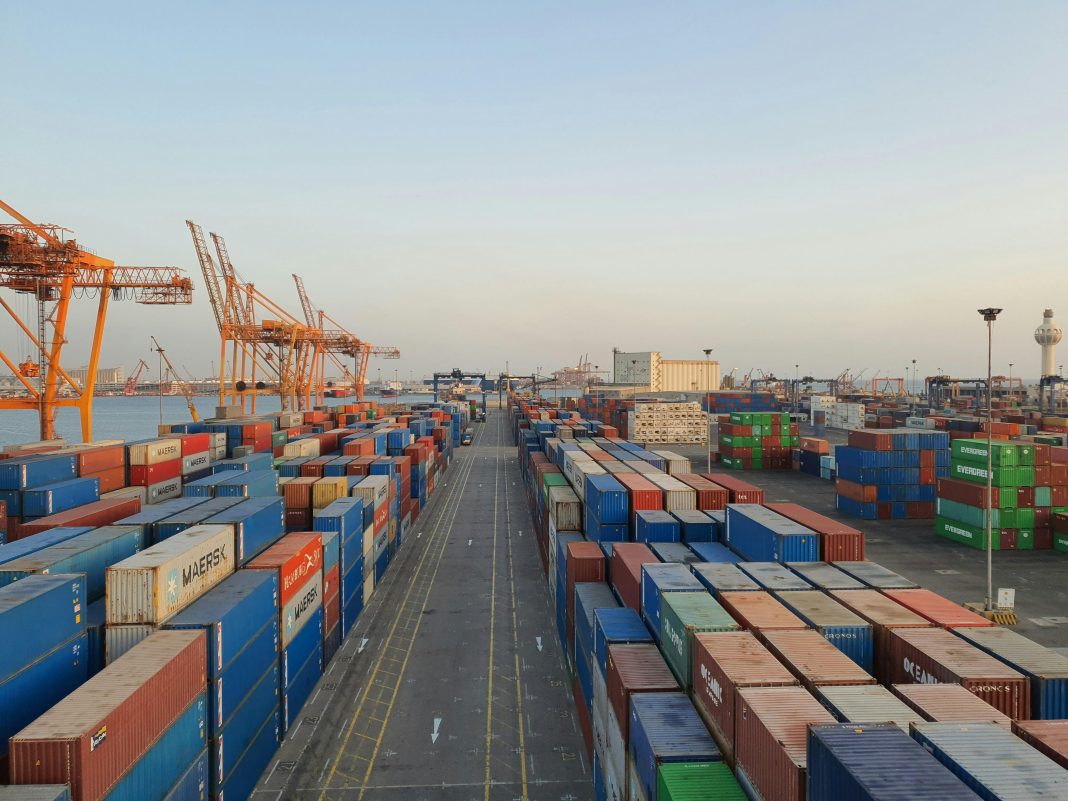

I’ll be upfront about something. Before a few weeks ago, I had absolutely no idea that trade associations existed in the way they do. I knew companies imported and exported stuff. I knew there were customs officers at airports. Beyond that, my understanding of how global trade actually worked was basically zero.
That changed when I found CONECT.
It started the way a lot of my random rabbit holes do. I was thinking about all the time I’ve spent in China, Thailand, and Vietnam, watching factories hum along, seeing shipping containers stacked at ports, and wondering where all that stuff actually goes once it leaves Asia. I started Googling around the edges of international trade, and somewhere in that search I landed on a website for something called the Coalition of New England Companies for Trade.
I read the name twice. Then I kept reading for the next hour.
So What Exactly Is CONECT?
CONECT stands for the Coalition of New England Companies for Trade. It’s a nonprofit, member-based business association built for companies that work in international trade and transportation. And when I say built for that world, I mean it covers pretty much every corner of it.
The membership includes importers, exporters, customs brokers, freight forwarders, truckers, port authorities, logistics providers, banks, law firms, cargo facilities, and consultants. Basically, if your work touches the movement of goods across borders, CONECT probably has a seat for you.
What struck me first was the scale. CONECT has been around since 1991 and now serves over 1,200 members representing more than 250 U.S. companies and organizations. That’s not a small meetup group. That’s a real institution with decades of weight behind it.
The Origin Story Is Actually Really Good
I have a soft spot for founding stories, especially the ones that start with a small group of people in a room deciding to do something about a problem. CONECT’s origin is exactly that kind of story.
Thirty-plus years ago, ten industry professionals gathered in a conference room at Reebok’s offices. The reason they were there was a specific piece of legislation: an apparel and footwear quota bill that had been filed in Congress. A Washington-based attorney named Peter Friedmann, working with Reebok’s Joan Padduck, realized this bill would seriously hurt Massachusetts importers if it passed.
So they went to Washington. They met with New England’s senators and representatives, who were genuinely surprised to discover that some of their constituents were actually in favor of imports and that current trade policy was hurting local businesses. The bill didn’t pass. But the experience made something very clear: there needed to be a permanent organization that could advocate for free and fair trade on behalf of New England companies.
That’s how CONECT was born. And it’s been doing exactly that ever since.
I find that kind of founding story compelling because it’s practical. It wasn’t about grand ideals or abstract principles. It was about a specific problem, a group of people who decided to fix it, and an organization that outlasted the original issue by three decades.
What CONECT Actually Does Day to Day
Reading the founding story is one thing. Understanding what a 35-year-old trade association actually does on a Tuesday afternoon is another.
CONECT operates on two main tracks: education and advocacy.
On the education side, they run a packed calendar of events including port tours, conferences, webinars, and industry-specific series. There’s a Transportation Series that digs into things like domestic trucking. There are Boston Port Tours for members who want to see how the physical side of trade works up close. And there’s the flagship event, the Northeast Trade and Transportation Conference, which happens annually and in 2026 will mark its 30th edition, taking place in Newport, Rhode Island in October.
On the advocacy side, CONECT does something I didn’t know nonprofit trade groups could pull off this effectively. They have a direct line to Washington through Peter Friedmann, the same attorney who helped found the organization. He’s been described as a genuine Washington insider, someone who regularly provides members with intelligence on what’s actually happening at the legislative and executive level. There’s even a members-only weekly call, held every Tuesday at 10am, specifically to discuss the latest news and legislation affecting international trade.
That’s a serious operation.
The Committee Structure Shows You How Deep This Goes
One of the things that surprised me most was the range of CONECT’s committee work. These aren’t just networking committees that meet once a quarter and share a spreadsheet. They cover real, active areas of concern for anyone in the trade business.
There’s a Customs Compliance committee, a Cybersecurity committee, an Export Sanctions and Controls committee, a Transportation committee, and a Next Generation committee aimed at bringing younger professionals into the industry.
That last one stood out to me. The fact that CONECT is actively thinking about who comes next in this industry, not just serving the people already in it, says something about how the organization thinks about its own longevity.
Who Backs CONECT?
The partner list is worth paying attention to because it gives you a sense of how seriously the industry takes this organization. Current CONECT Partners include Massport (Massachusetts Port Authority), Hapag-Lloyd, KPMG, OOCL Logistics, RoadOne, Dimerco, and the Northwest Seaport Alliance, among others.
These are not small names. When a major international shipping line and one of the Big Four accounting firms are both showing up as partners for the same regional trade association, you know the organization has real credibility in its space.
Membership Is More Accessible Than I Expected
I assumed something like this would be expensive or hard to get into. It’s neither.
CONECT offers four levels of membership. The Partner level is the top tier with variable annual fees and the highest visibility. Corporate membership, which covers two or more people from the same company, runs $450 per year. Individual membership is $250 per year. And for students studying supply chain or a related field, the annual fee is just $50.
That student tier genuinely surprised me. For fifty dollars a year, a student gets access to a network of over a thousand people working across every corner of international trade. That’s the kind of room most entry-level professionals would pay a lot more to get into.
There’s also a Senator John Chafee Memorial Scholarship Program for students in the field, which is another signal that CONECT takes the pipeline of new talent seriously.
Why This Stuck With Me
I spend a lot of my time writing about places, food, and what it feels like to be somewhere new. But the more time I spend living and traveling in Asia, the more I find myself thinking about the invisible systems that connect the places I visit to the rest of the world.
CONECT sits right at the center of one of those systems for the New England region. It’s the organization that makes sure companies importing goods from the countries I’ve been living in have a voice, a community, and access to the information they need to actually operate.
That might not be the kind of thing that makes a great Instagram photo. But it’s the kind of thing that quietly keeps a lot of businesses running, and a lot of goods moving, in a way that most people never think about.