

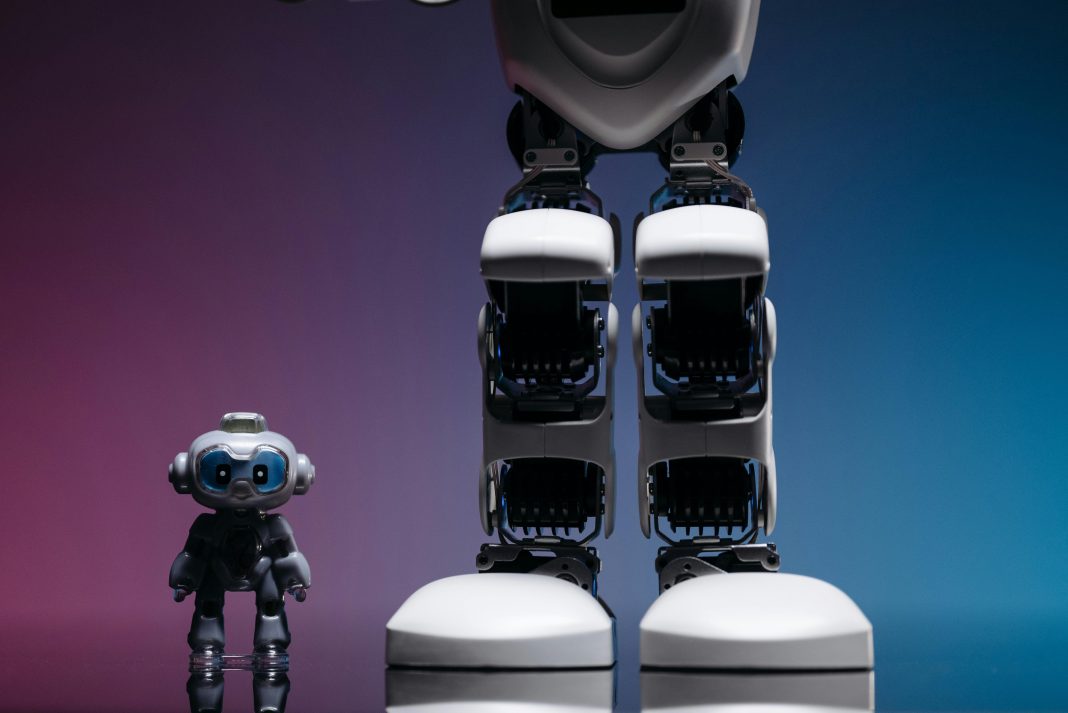

I still remember standing inside a hotpot restaurant in Chengdu, watching a little robot on wheels glide past me with a steaming tray of food. No waiter. No human hand. Just a machine doing its job, smooth and quiet, like it had been doing this for years.
At the time, I laughed it off as a novelty. Cool for tourists, I thought. But as I kept traveling through Japan, Thailand, South Korea, and across parts of Southeast Asia, I started noticing that robots were showing up everywhere. Not just in fancy tech showrooms. In airports. In warehouses. In hospitals. In construction zones.
That is when the novelty wore off and the real question hit me: who is actually building the software that makes all of this work?
The Part Nobody Talks About
When people think about robots, they usually picture the physical machine. The arms, the wheels, the cameras. That stuff is impressive, sure. But the hardware is only half the story.
The harder part, the part that most people never see, is the software running underneath. The code that tells the robot exactly what to do, in what order, every single time, without crashing or getting confused.
This is the problem that a Berkeley-based startup called Xronos is trying to solve. And honestly, the more I learned about what they are building, the more it clicked with everything I had been seeing on the road.
So What Is Xronos, Exactly?
Xronos is a software platform built for robotics and automation developers. Think of it this way: if a robot is the body, Xronos is the nervous system.
It gives engineers a framework they can use to write the logic that controls a robot’s behavior. You can use Python or C++, whatever you are comfortable with. The platform runs on any Linux system, installs with a single command, and does not require any complicated setup.
What makes Xronos different from other tools in this space is something they call deterministic runtime. In plain language, this means that whatever you build and test in a simulated environment will behave exactly the same way when you deploy it in the real world.
That sounds simple, but it is actually a really big deal. One of the biggest headaches in robotics development is when a system works perfectly during testing and then does something completely unexpected the moment it goes live. Xronos is designed to eliminate that gap.
Real-Time Visibility While You Build
Another thing that stood out to me when I looked into Xronos more deeply was their approach to observability.
When you are building a complex robotic system, you need to be able to see what is happening inside it at any given moment. Where is the data going? Which component is slowing things down? Is the system behaving the way you expected?
Most development tools make you add a bunch of external monitoring software just to answer those questions. Xronos builds all of that in from the start. You get real-time telemetry, system tracing, and an automatic visualization of your system architecture as you build it.

I thought about that robot in Chengdu again. Someone had to write the code that told it when to move, when to stop, when a tray was too heavy, when the path ahead was blocked. With a tool like Xronos, a small engineering team could build and monitor all of that without drowning in complexity.
Open Source and Built for Real Teams
One thing worth mentioning is that Xronos is open source. You can find their code on GitHub right now and start experimenting with it for free. This matters because it lowers the barrier to entry for smaller teams and independent developers who want to build serious robotics projects without a massive budget.
The founders come from academic research backgrounds, including work that traces back to UC Berkeley. That kind of foundation tends to produce software that is thought through carefully, not just thrown together to chase a trend.
The team includes Marten Lohstroh as CEO, Christian Menard as Principal Architect, and Edward A. Lee as an advisor. Lee has spent decades thinking about how computers handle time and concurrency, and that depth of thinking shows up in how Xronos approaches the problem. These are not people who stumbled into robotics by accident.
Why This Matters If You Are Not a Developer
You might be reading this thinking: okay, but I am not an engineer. Why should I care about any of this?
Fair point. But here is the thing. Every piece of automation you interact with as a traveler or as a consumer, airport check-in kiosks, warehouse robots fulfilling your online orders, delivery drones, self-guided luggage carts, all of it depends on software infrastructure like what Xronos is building.
The better that infrastructure gets, the more reliable and safe those systems become. And the faster developers can build them, the sooner they show up in places where they can genuinely help people.
I have been in countries where labor shortages in agriculture and logistics are a serious problem. Automation is not a threat in those contexts. It is a lifeline. But only if the software powering those machines is trustworthy enough to actually be trusted.
A Company Worth Watching
Xronos has already been featured at TechCrunch’s Startup Battlefield and is backed by Plug and Play Tech Center, which has a track record of supporting companies that go on to build real things.
They are not trying to sell you a flashy demo. They are building foundational infrastructure for a world that is going to have a lot more robots in it, whether we are ready or not.
After years of traveling and watching automation quietly take root in places most people back home never think about, I find it genuinely exciting when I come across a team approaching this problem with both technical depth and a clear sense of why it matters.
Xronos is one of those teams. Worth keeping an eye on.