

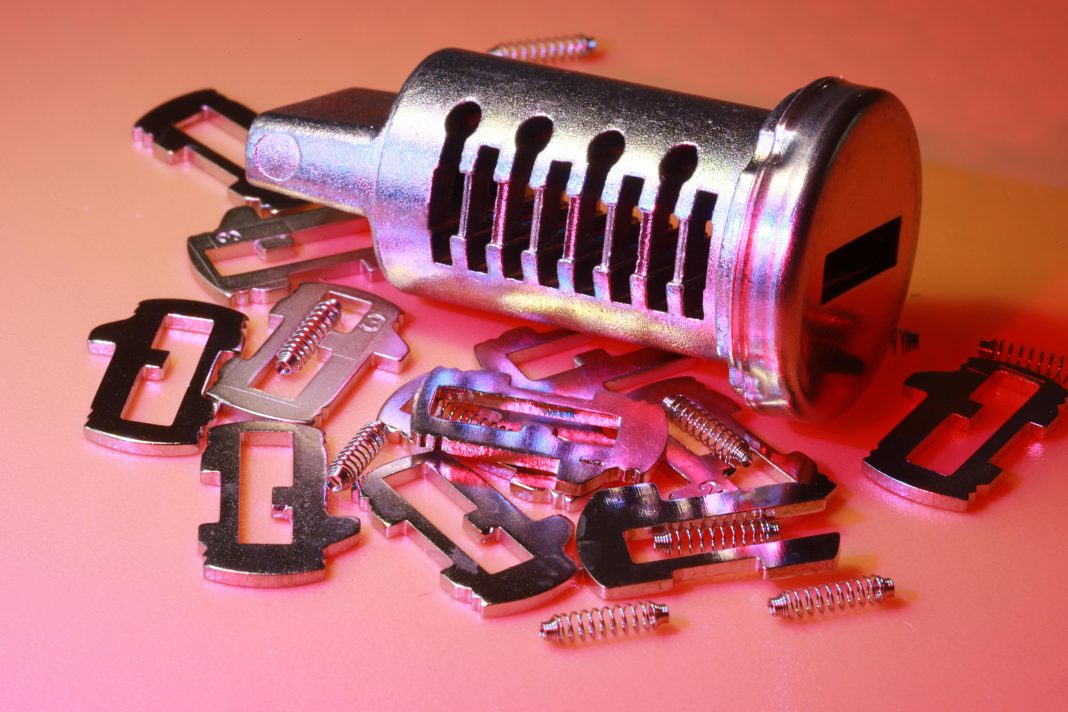

I have this slightly annoying habit of noticing things other people completely ignore.
It started years ago on a long-haul flight when I pushed back into my seat and felt that familiar resistance. Not too stiff, not too loose. Just right. And instead of watching the in-flight movie like a normal person, I spent the next ten minutes wondering what was actually inside that seat making it feel that way.
Spoiler: it was a spring. Well, a few of them.
That rabbit hole eventually led me to a company called Lee Spring, a Brooklyn-based manufacturer that has been making springs since 1918. Over a century of supplying precision components to industries most travelers never think about: aerospace, outdoor equipment, consumer electronics, hospitality hardware. More than 25,000 stock spring designs, plus custom manufacturing for engineers who need something specific.
The more I learned, the more I started noticing springs everywhere. So here are ten things that make your trips work, backed by engineering you’ve probably never once thought about.
1. The Recline Mechanism in Your Airplane Seat
Next time you push that little button and lean back, think about what’s actually happening. There’s a spring-loaded system inside the seat frame that controls the movement in both directions: backward when you recline, and the resistance you feel when you push forward again. Without it, the seat would either slam back the moment you touched the button or stay locked rigid forever. Compression springs regulate the tension so the motion is smooth, quiet, and repeatable across the tens of thousands of flights that seat will complete in its lifetime. Airlines are picky about these components for good reason.
2. The Handle on Your Rolling Suitcase
This one is so obvious once you think about it. Pull up the telescoping handle and you hear a click. That’s a spring-loaded latch locking into a notch inside the aluminum tube. Press the button to retract it, and the spring releases. Simple concept, but it takes serious wear over time. Frequent travelers extend and collapse that handle several times every travel day. The spring inside needs to hold up under real-world repetition, not just survive a factory test.
3. Spinner Wheel Locks on Carry-On Luggage
Some carry-on bags have a small lever or switch near the base that locks the wheels in a fixed direction, handy for walking in straight lines down jet bridges without your bag drifting sideways. That lock is spring-loaded. A small spring holds the pin against the wheel housing under constant tension. Without that tension, the lock would work loose after the first few bumps on a rough airport floor.
4. The Igniter on a Portable Camping Stove
I used a compact backpacking stove across four nights in northern Scotland a while back. Rain, wind, temperatures that felt colder than they had any right to be in August. The igniter worked every single time. The reason is that most piezoelectric igniters work by compressing a spring, building up mechanical energy, and then releasing it instantly to generate the electrical pulse that creates the spark. It’s a beautifully simple mechanism. You only notice it when it fails, which, with a well-made spring, is not very often.

5. Trekking Pole Adjustment Systems
Whether your poles use a twist-lock or a flip-lock system, both rely on spring tension to keep the sections at your chosen length. The spring pushes locking components outward against the inner wall of the pole tube. It’s a small force, but it’s constant, and it’s what prevents the pole from suddenly collapsing downward when you put your weight on it going downhill. If you’ve ever had a pole collapse mid-stride on a steep descent, you know exactly how important that little component is.
6. The Shutter in Your Travel Camera
This one surprised me. Whether you’re shooting with a mirrorless body or a small point-and-shoot, the shutter mechanism uses springs to control blade movement and return speed. Torsion springs and compression springs work together to regulate how fast the shutter opens, closes, and resets. At fast shutter speeds, these springs are cycling thousands of times per minute. Companies like Lee Spring produce custom torsion springs for precision optical and electronic applications where the tolerances are extremely tight and consistency is non-negotiable.
7. The Latch on Your Hotel Room Door
Walk into any hotel room and push the handle down. The spring-loaded latch bolt retracts into the door, you walk in, the handle returns to position, the bolt snaps forward. That same action happens hundreds of times a day in a busy hotel, across years of use. The springs inside that latch mechanism are doing repetitive work in a commercial environment. Good ones are engineered to handle it without wearing out or sticking. Bad ones are the reason hotel maintenance staff stay busy.
8. Lacing Hardware on Hiking Boots
This one is subtle. On technical hiking boots and some trail runners, the lace locks and speed hooks are not just passive metal rings. Some of them are spring-loaded, gripping the lace under gentle tension to hold it in place even when the lace goes slightly slack during a foot flex. It’s a small detail that keeps your fit consistent across a long day of walking without having to re-lace every few hours. You’d never notice it unless it stopped working.
9. The Tray Table Hinge on Your Flight
Fold down the tray table on your next flight and pay attention to how it moves. It doesn’t just drop freely. It descends at a controlled, steady pace and then locks flat with a firm click. There’s a spring-loaded hinge managing that controlled descent and locking the table level under load. An uncontrolled drop would be annoying at best and a minor injury risk at worst if you were holding something on it. Aerospace seat components go through rigorous cycle testing, which is part of why manufacturers lean on suppliers with solid engineering track records.
10. Folding Camp Chairs and Cots
A few years ago I bought a folding camp chair that I genuinely expected to be flimsy. It wasn’t. The legs locked open with a satisfying snap and felt genuinely solid under weight. Inside those leg hinges is a spring that drives the locking action: once the joint reaches the right angle, the spring snaps it into the locked position. It’s not just a convenience feature. It’s structural. That spring is part of what stops the chair from folding underneath you when you sit down after a long day on the trail.
Why Any of This Actually Matters
I think about this stuff because it changed how I pack and what I buy.
Before I started paying attention to component quality, I bought gear based on price and looks. I ended up with handles that jammed, poles that slipped, chairs that wobbled. Once I started understanding that the difference usually came down to small internal components, I got more selective. And I stopped being surprised when cheaper gear failed.
Lee Spring sits at the base of a very long supply chain. Most travelers will never hear of them, which is fine. That’s how it works when you make components rather than finished products. But engineers across aerospace, consumer goods, outdoor equipment, and commercial hardware source from them because the specs are consistent and the track record is over a hundred years long. Compression springs, extension springs, torsion springs, wave springs, die springs, Belleville washers, all manufactured with full certificates of compliance and RoHS compliance across a global distribution network.
So next time you’re on a flight, on a trail, or setting up a camp kitchen in a field somewhere, spare a second for the invisible engineering making all of it work. It’s almost certainly a spring. And somewhere upstream in that product’s supply chain, there’s a very good chance it came from somewhere that has been getting springs right since before commercial aviation even existed.